When preparing for a new arrival, parents spend plenty of time considering what comes into contact with their baby’s skin, from skincare products and bath essentials to the fabrics they wear. Yet one everyday essential can sometimes slip through the net: the humble nappy.
Worn day and night throughout a baby’s earliest years, nappies are among the products babies use most frequently. And not all nappies are made the same. With multiple layers and various materials to consider, understanding exactly what goes into them isn’t always straightforward. Furthermore, the claims often found on packaging, from ‘plant-based’ and ‘natural’ to ‘skin-friendly’, and knowing what to look for can become a little confusing.
So, what should parents prioritise when choosing a nappy, and what do the different labels really tell us?”
Understanding what a nappy is made from
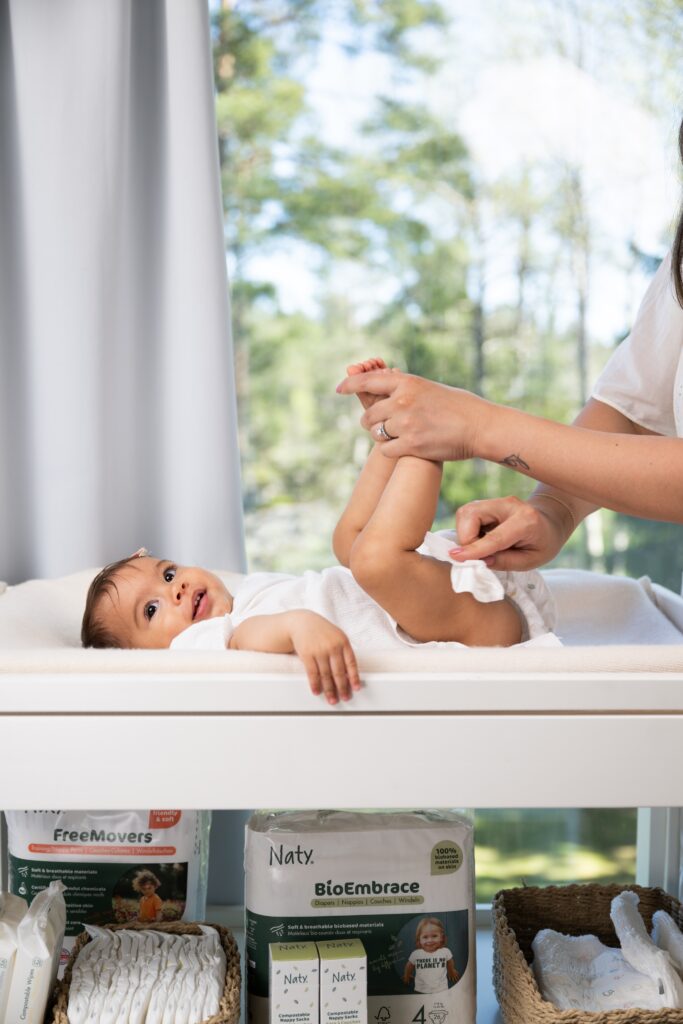
A disposable nappy is made up of several layers, each with a different purpose. The top sheet sits directly against a baby’s skin, while the absorbent core draws in and retains moisture. Other components, including the leg cuffs and outer backing, help provide a secure fit and protect against leaks.
When a nappy is described as plant-based, it’s worth checking exactly which components this refers to. The claim may apply to specific layers rather than the entire product, and plant-based materials don’t automatically mean a nappy is completely plastic-free or biodegradable.
Plant-based plastics are made using renewable plant resources rather than relying solely on fossil fuels. Alongside natural fibres, they can offer an alternative to conventional fossil fuel-based materials, helping reduce dependence on finite resources.
For parents looking to make more considered choices, understanding where these materials are used can be a helpful starting point.
Do nappies need perfume or lotion?
Fragrance and lotion are sometimes added to baby products, but neither is essential to a nappy’s main purpose of absorbing moisture and helping prevent leaks.
Parents who prefer to avoid these additions can look for products clearly labelled as perfume-free and lotion-free. It’s also worth looking beyond broad descriptions such as ‘gentle’ or ‘skin-friendly’ to understand how a product has been tested.
Every baby’s skin is different, and even products designed for sensitive skin may not suit every child. If your baby experiences persistent redness, soreness or irritation, seek advice from your health visitor, pharmacist or GP rather than assuming the nappy is necessarily the cause.
Making sense of safety certifications
With so many claims competing for attention, independent testing and certification can help parents understand more about the products they’re choosing. Different certifications serve different purposes, so knowing what each one covers is particularly useful.
OEKO-TEX® STANDARD 100 is an internationally recognised product-testing certification that assesses textiles and materials against a list of more than 1,000 potentially harmful substances, including formaldehyde, phthalates, PFAS, heavy metals and polycyclic aromatic hydrocarbons (PAHs). Particularly strict requirements apply to products intended for babies and young children.
Each certification serves a different purpose. OEKO-TEX® STANDARD 100 tests products for potentially harmful substances, DIN CERTCO certifies biobased materials, and Dermatest® assesses skin compatibility through dermatological testing.
It’s also worth checking which parts of a product a certification covers, as it may apply to specific materials rather than the entire product.
Why material choice matters
For parents who want to reduce their reliance on fossil fuel-based materials without compromising on everyday practicality, plant-based alternatives are becoming an increasingly important consideration.
Swedish babycare brand Naty was founded in 1994 with a mission to develop alternatives that combine plant-based innovation, independently verified product claims and reliable performance. Its approach centres on the belief that parents shouldn’t have to choose between the materials used in a product, their baby’s comfort and the practical demands of everyday life.
Naty is also a Certified B Corporation™, meeting independently verified standards for social and environmental performance, accountability and transparency.
Introducing Naty BioEmbrace: a skin-first approach
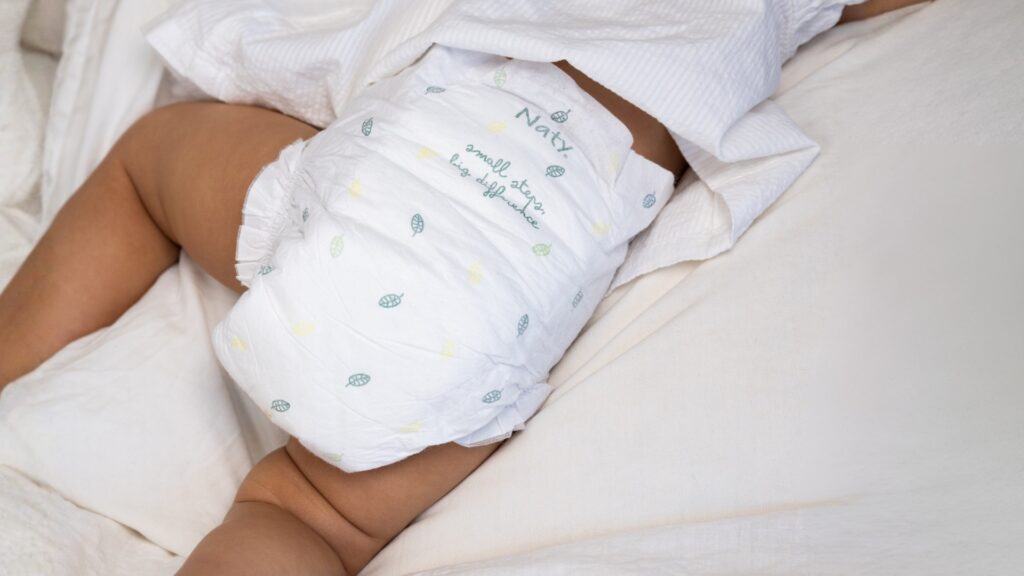
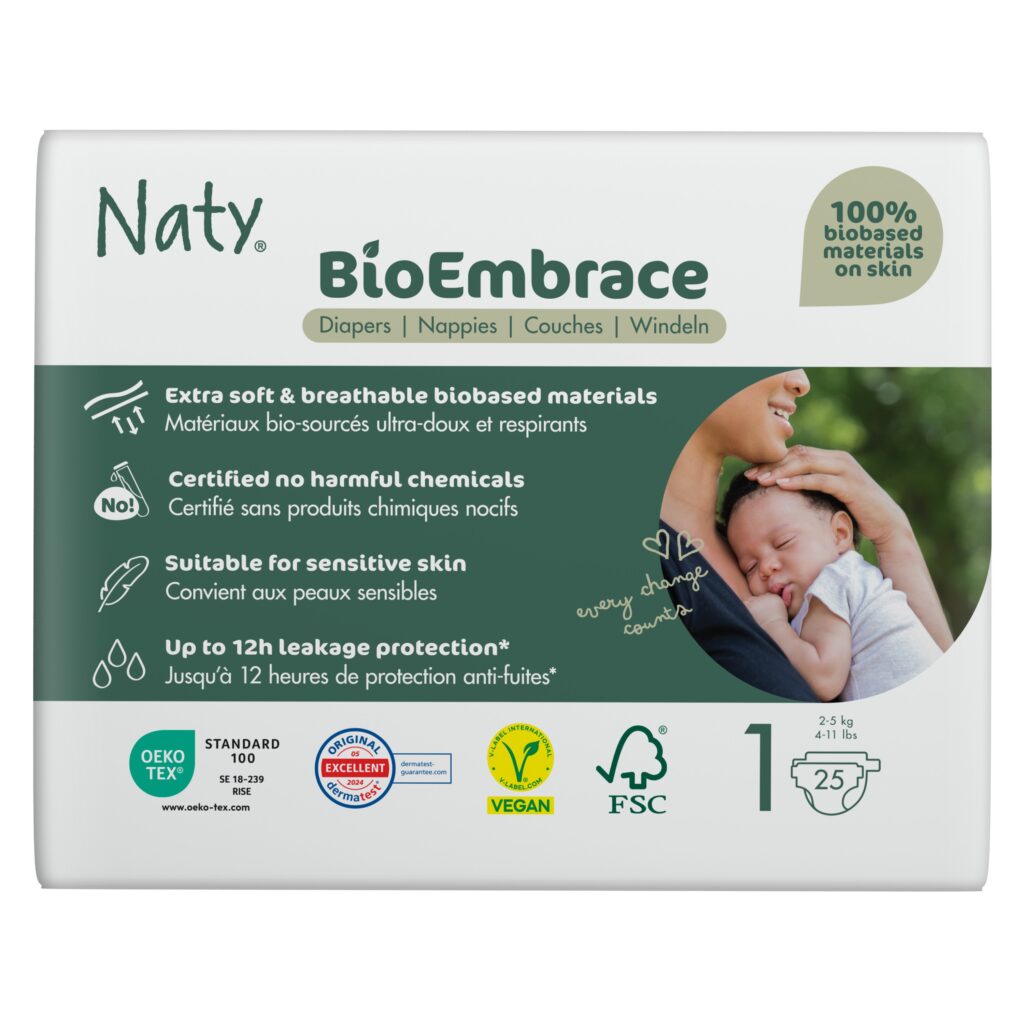
Naty’s BioEmbrace nappies bring these principles together, combining plant-based materials, independent safety certifications and everyday performance.
BioEmbrace is the only nappy currently certified by DIN CERTCO to contain 100% plant-based materials across all components that sit directly against a baby’s skin. These include the top sheet, leg cuffs, backsheet and ears, replacing fossil-based plastics in the layers closest to little ones.
The nappies are certified to OEKO-TEX® STANDARD 100 and have received an ‘Excellent’ rating through Dermatest® Hyposense testing for sensitive skin, confirming excellent skin tolerability and hypoallergenic properties. They are also made without perfume or lotion.
Inside, the absorbent core combines FSC-certified pulp with superabsorbent materials to help draw in and retain moisture. A built-in wetness indicator makes changes easier for parents, while the nappies are designed to offer up to 12-hours of leak protection.*
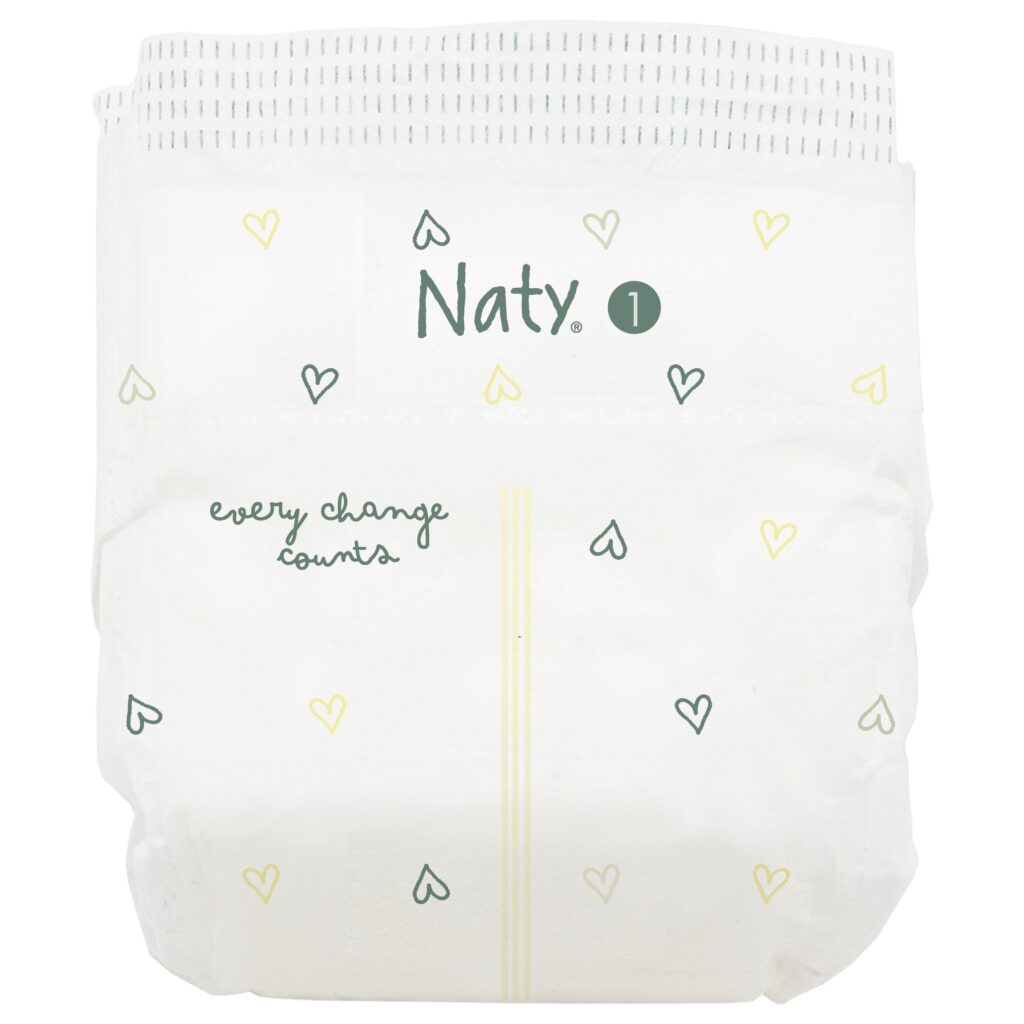
Available in sizes 1–6, BioEmbrace nappies demonstrate how plant-based materials and independently verified skin-safety credentials can sit alongside the comfort and absorbency families need.
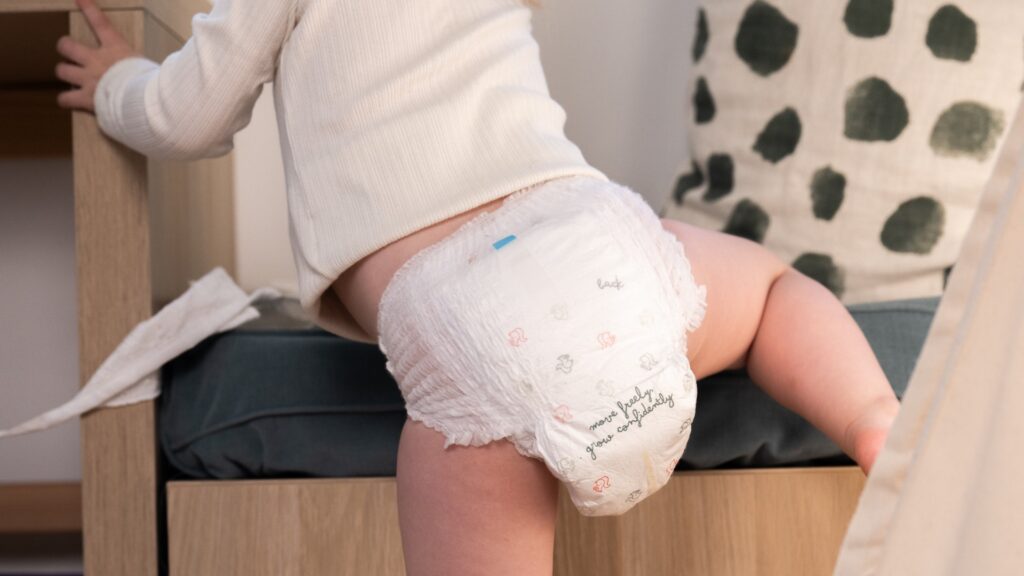
As babies grow and become more mobile, Naty’s FreeMovers nappy pants (available in sizes 4-8) offer another option. Designed for active little ones, they feature a flexible pull-on fit, a wetness indicator and convenient disposal tape, alongside dermatological testing and OEKO-TEX® STANDARD 100 certification. They are also designed to provide up to 12-hours of leak protection.*
Choosing with confidence
There’s no need for parents to feel overwhelmed by the range of claims on nappy packaging. A few simple questions can help make the decision easier: which materials come into contact with my baby’s skin? Does the product contain perfume or lotion? And what, exactly, has been independently tested or certified?
Understanding the answers can help families choose products that suit their individual needs and priorities, whether that’s plant-based materials, skin-safety testing, reliable leak protection or a combination of all three.
Naty BioEmbrace nappies and FreeMovers nappy pants are available online from Naty, Amazon and Ocado, and in selected stores including Boots, Waitrose and independent health retailers.
* Up to 12 hours of leak protection is based on in-home consumer testing of BioEmbrace Size 4 and FreeMovers Size 5, respectively.