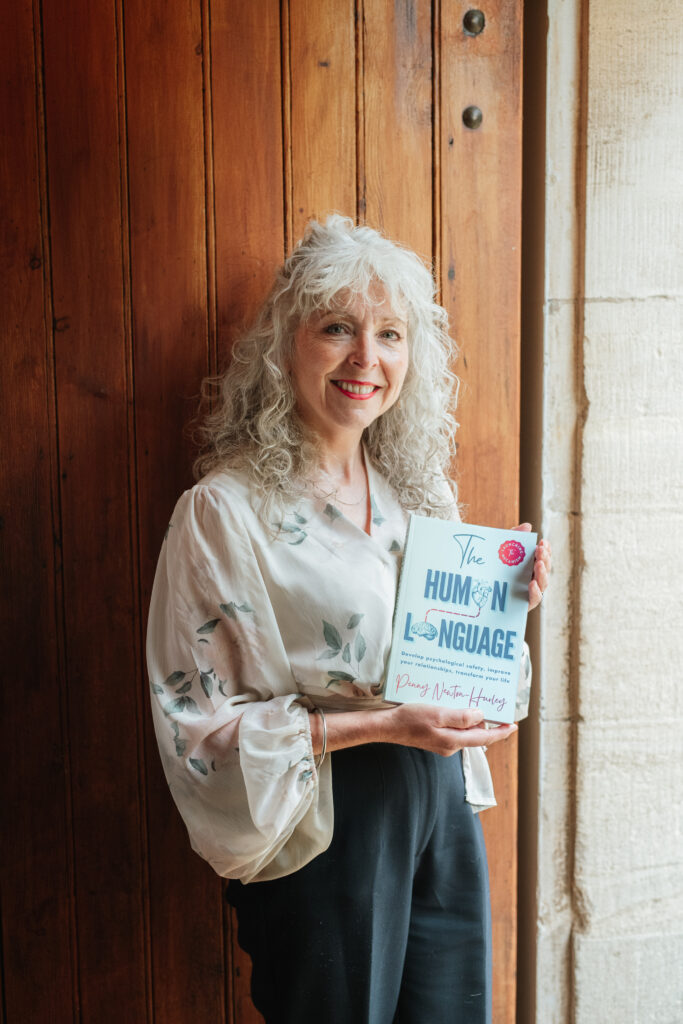
Penny Newton-Hurley is the founder of CommPassion Ltd, a Workplace Mediator and specialist in compassionate communication, conflict resolution and psychological safety. With more than 30 years’ experience working across public and private sector organisations in the UK and internationally, she helps individuals and organisations build stronger relationships and navigate difficult conversations. She is the author of The Human Language, which introduces her practical communication framework, The MECAnism, exploring how empathy, authenticity and understanding can transform the way we communicate.
How often have you found yourself saying, “My child never listens to me”?
Perhaps you have asked them three times to put their shoes on, leave the playground or come downstairs for dinner. Nothing happens. Your frustration builds until eventually you raise your voice.
The problem is that, without realising it, both parent and child can become caught in what I call “reaction ping-pong”. We react to their behaviour, they react to our words or tone, we react again, and suddenly a simple request has become an argument.
The good news is that small changes to the way we communicate can make an enormous difference. By understanding the thoughts, emotions and underlying needs behind our reactions, we can begin to change the way we approach everyday family disagreements.
“Many parents are exhausted and under huge pressure behind the scenes. In those situations, communication can quickly become reactive. Children are then labelled as ‘not listening’ or ‘being difficult’, when often both sides simply feel frustrated, unheard or overwhelmed.”
Seven Small Changes That Can Transform the Way You Communicate With Your Child
“You’re naughty”, “You’re lazy” or “You never listen” are judgements, not facts.
Try describing what has actually happened instead. Rather than saying, “You never listen to me”, you might say: “I’ve asked you twice to put your shoes on and they’re still beside the door.” Separating what we observe from what we think about it helps prevent children from feeling criticised or attacked.
When we are frustrated, exaggeration slips easily into our language: “You always leave your room like this” or “You never do what I ask.” But children are likely to focus on defending themselves: “I don’t always do that!” Instead, keep to what is happening now. For example: “Your clothes have been on the floor since Friday.” Sticking to the facts makes it much easier to have a useful conversation.
There is an important difference between telling a child, “You have to get ready now!” and involving them in what happens next. Explain the reason behind your request. You might say: “I’d like us to be on time for your appointment, and we have ten minutes before we leave. Would you put your shoes on now?” Using “would” rather than “can” asks about their willingness rather than their ability. Children may still say no, of course, but understanding why something matters, and the underlying need behind the request, creates far more opportunity for cooperation than “because I said so”.
When a child does not immediately do what we want, it is easy to assume they are deliberately ignoring us. Pause and consider what might be happening for them. A child who wants five more minutes with friends after school may not be trying to embarrass their parent. They may simply be enjoying connection and finding it difficult to leave. Understanding their perspective does not mean abandoning your own needs. It means recognising both their needs and yours, and approaching the situation with empathy.
We often say things such as, “You’re making me angry” or “You’re embarrassing me.” Instead, try taking responsibility for the emotion: “I’m feeling stressed because I like to respect people’s time, and at the moment we risk being late.” Your child can then hear what is happening for you without receiving the message that they are responsible for your feelings.
Sometimes we are so focused on getting children to listen to us that we forget to listen to them. If your child is upset, try resisting the immediate urge to advise, correct or reassure. Start instead with curiosity: “You sound really disappointed. Do you want to tell me what happened?” Being heard is one of our deepest human needs. A child who feels heard is far more likely to remain connected to the conversation.
Perhaps the most powerful communication skill is also the simplest: pause. When you feel yourself becoming angry or frustrated, notice what is happening inside you before speaking. What are you thinking? What are you feeling? What do you need? And what action is most likely to help? That tiny pause can be enough to stop reaction ping-pong before it starts. None of this is about becoming a perfect parent. We will all lose patience occasionally. It is about becoming more conscious of the words we use. When children feel listened to, respected and understood, we create the psychological safety that allows them to tell us what they really think and feel. And that can transform not only the conversation in front of us, but our relationship with them too.
The Human Language
These principles form part of Penny’s MECAnism framework, explored in her book, The Human Language, which encourages readers to look beyond reactions and understand the thoughts, emotions and core needs that shape the way we communicate.