Your child’s superpower
I repeatedly meet children labelled ‘reluctant readers’ who become utterly absorbed in my stories within minutes. That’s not because I have some hypnotic superpower. It’s because stories tap into every child’s own superpower: their imagination.
Everyone has imagination. Recent neuroscience shows our brains constantly use imagination to help us navigate life.
That’s why, like a muscle, your child is naturally compelled to exercise their imagination. Just as they run excitedly around a park and strengthen their legs as a bonus, they crave imaginative play without realising how they’re enhancing their problem-solving abilities.
But therein lies a risk…
Screens: tough competition?
Screens supply an extraordinary amount for your child: pictures, voices, sounds, movement. Even creative games offer a ready-made visual world, providing the excitement of imaginative play without the need to actually imagine.
It’s like carrying your child around the park: they get the fun, but you get the exercise.
But can screens be a gateway into reading?
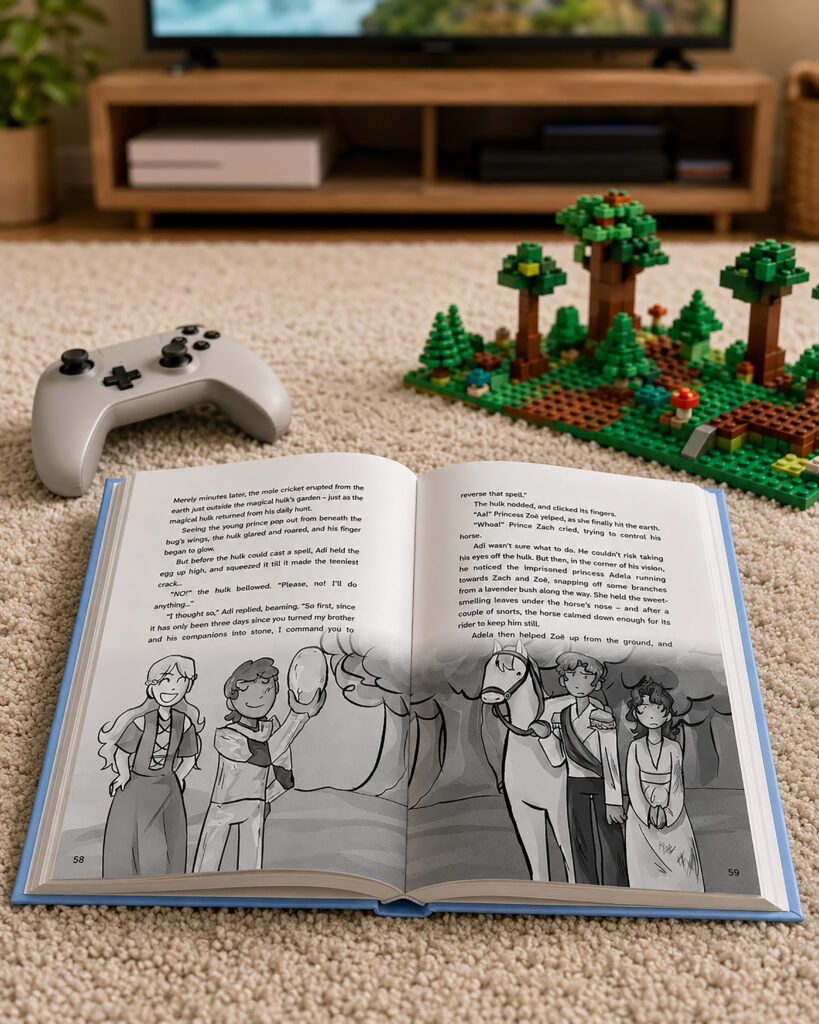
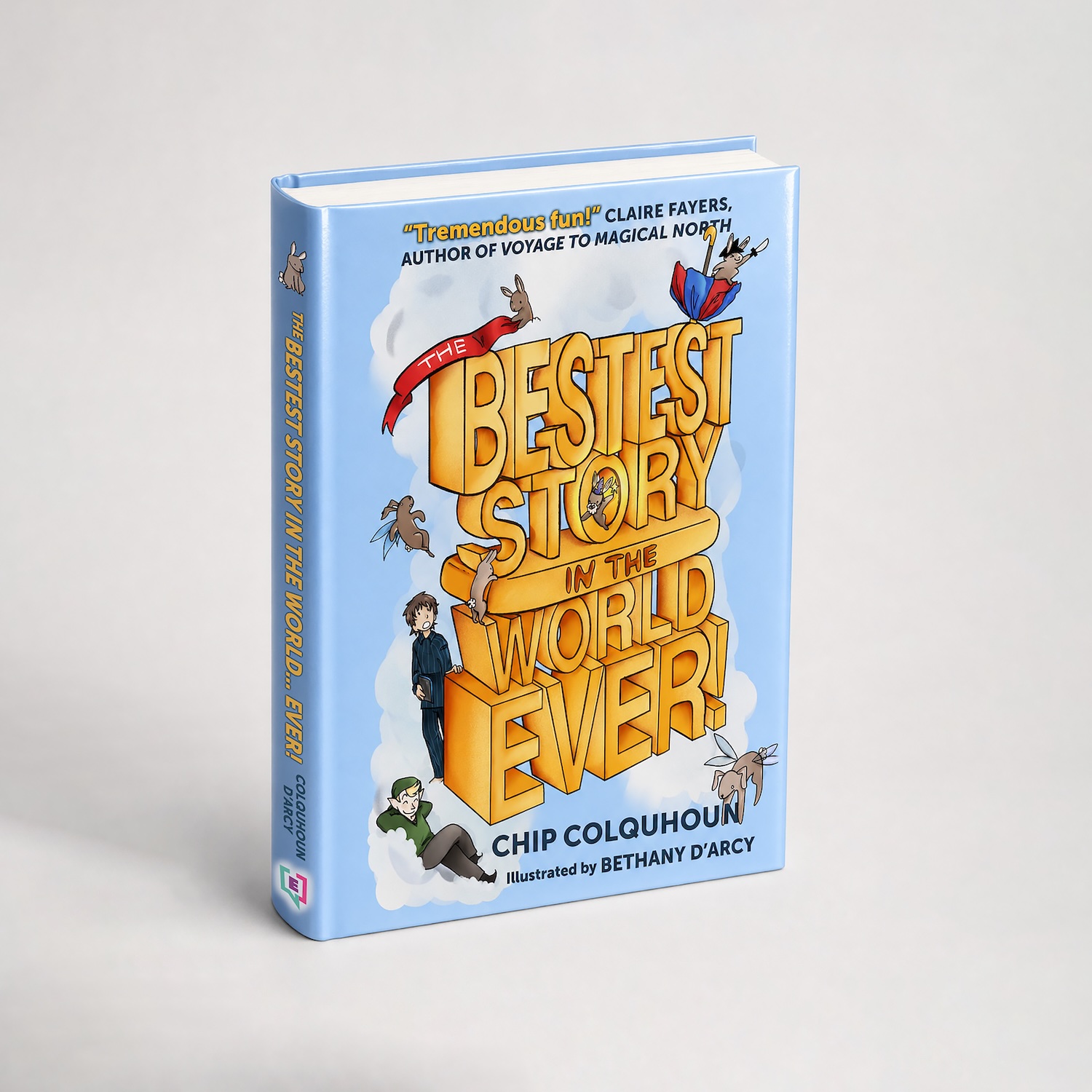
The Bestest Story in the World Ever by Chip Colquhoun and illustrated by Bethany D’Arcy
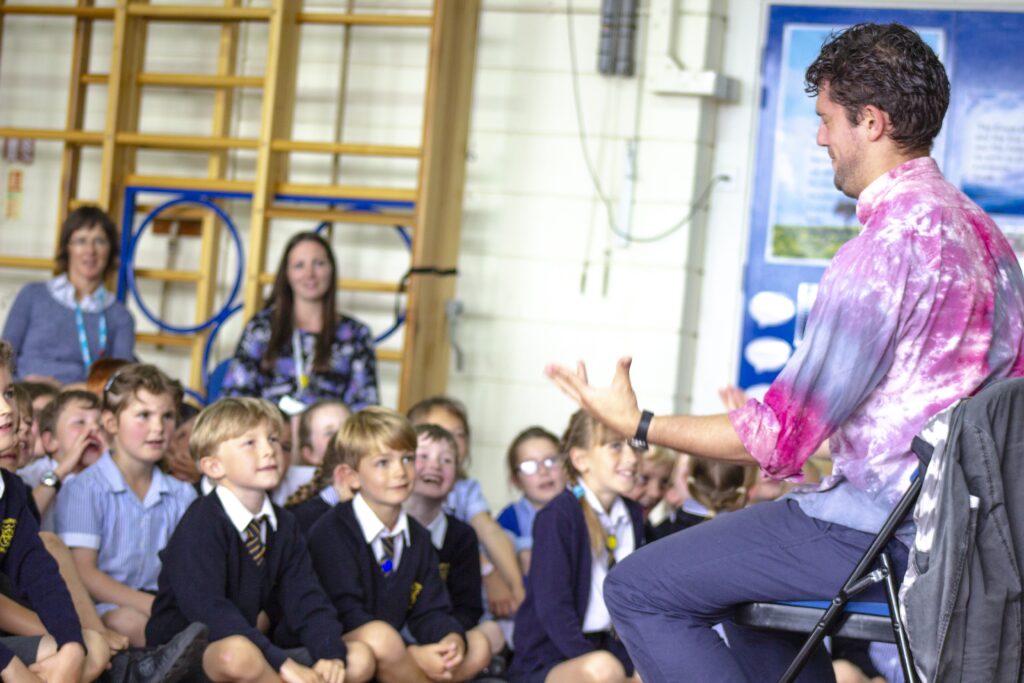
Main Image (above): Storyteller Chip spellbinding children at St Katherine’s Primary School, Bournemouth. Photo: Erica Terry-Rose (Children’s images used with permission)
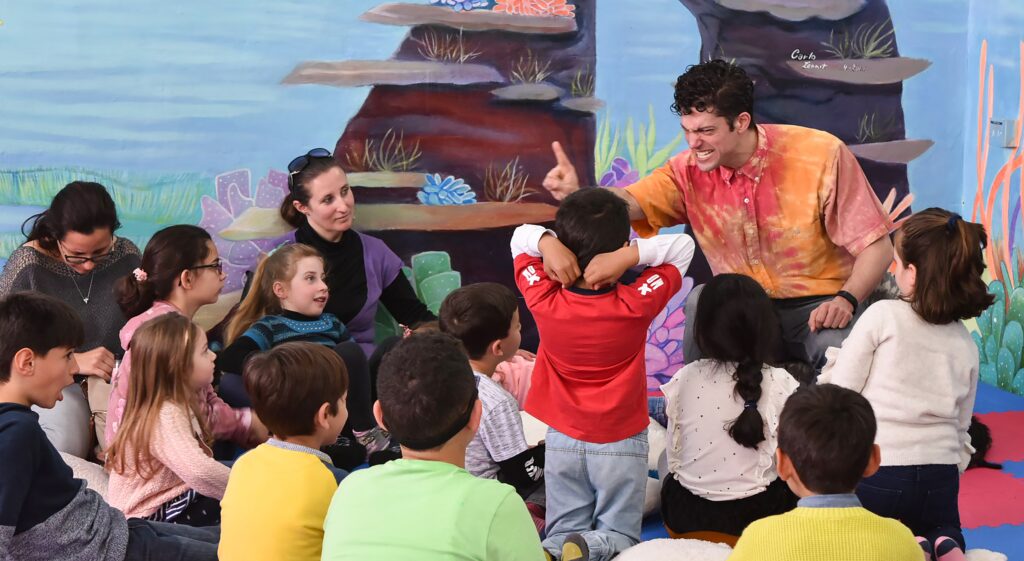
Storyteller Chip spellbinding children at a school in Malta. Image: Angele Haber (Children’s images used with permission)
Can Books Compete With Screens? How to Turn Screen-Time Into Story-Time
By Chip Colquhoun, Chief Storyteller at Epic Tales®
1. Start with stories they already enjoy
Ask questions around the game they’re playing or video they’re enjoying.
What might happen in the sequel? What was that background character doing before the hero arrived? And, most powerfully… Where did the creators get that idea from?
Games are full of ideas that have thrilled humans for millennia. An unbeatable boss whose weakness is hidden elsewhere? That’s a timeless folktale about a giant who keeps his heart outside his body.
Show children that stories aren’t an alternative universe to the things they love. They’re the source material.
3. Move from consuming to creating
While reading, give your child a creative task.
Illustrate the story on a tablet. Build a map in LEGO. Hum a soundtrack.
Eventually, that creativity becomes more satisfying than consuming someone else’s.
2. Don’t insist the screen goes off before the story starts
It may feel counter-intuitive but read aloud while your child plays. Don’t demand eye contact. Just occasionally ask, “Was that a good choice?” or “What might happen now?”
If you get no response, answer yourself and carry on. Try again later. Before long, they’ll surprise you with how much they’ve taken in.
I’m not alone in seeing this work. Andreea described her son Noah as stubborn, wilful, and extremely difficult to engage. At school, he often entered a ‘non-verbal mode’ when teachers tried involving him in anything without a screen.
His sister, however, loved my storybooks. Once, Andreea read these to her while Noah used his tablet nearby. That bedtime, Noah began asking about those stories. He remembered them and wanted more.
Soon afterwards, Noah’s school reported that he’d begun writing his own stories and grown more cooperative. Andreea spotted links between his stories and mine and realised: just reading around the screen had led to leaps in his self-expression.
4. Make books irresistible: read them yourself first
Once conversation comes easily, introduce books you’ve read – but only reveal enough to spark curiosity.
“There was this bit where three friendly thieves found an enormous case of gold… but all three wanted it.”
When they ask what happened next, don’t say. Just leave the book in their room.
You’re not arguing that reading is important. You’re signposting their way to fun.
From High Scores to High Life
After Andreea shared her gratitude with my publisher, I was inspired to retell Noah’s journey in my latest children’s book, The Bestest Story in the World… Ever! Five years on, Noah was interviewed on radio about becoming a book character.
For a boy who once retreated into ‘non-verbal mode’ under pressure, how awesome was that?!
So exercise your child’s imagination alongside their screens, and they’ll soon keenly swap screen for page. Remember: a child who prefers screens isn’t a ‘reluctant reader’.
They just haven’t discovered their superpower yet.
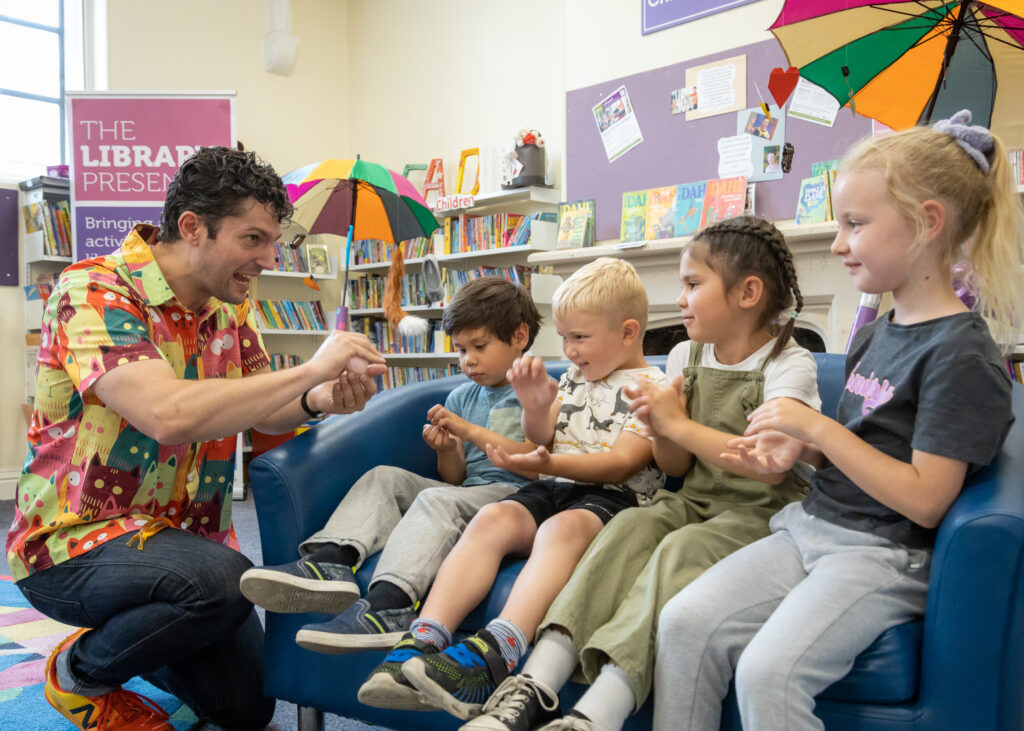
Chip’s stories engage all ages, involving them in movement and creativity. Here he’s enthralling reluctant readers at a library introduction event in Cambridgeshire. Image: Jeremy Peters (Children’s images used with permission)